Just like the game, Food Monopolies suck.
I think I have bitten of more than I can chew with this months topic. I wanted to talk about food policy, something that is actually really interesting and important and that I will come back to later. Instead this month I am going to discuss the food industry or more specifically. Food monopolies! Yea this is the real meat and potatoes when it comes to international food security and policy. You see for us to discuss food policy we first have to wade into the murky waters of who actually controls the worlds food supply. There are a handful of corporations that control the flow of food for the planet which as you can imagine is a lot of power. They control every aspect of the food system, from production to distribution. So let’s start at the beginning.
The Seeds of wealth:
Today there are 4 companies that own between 40-60% of the worlds seeds as well as 70% of the agrochemical industry(Radical abundance, 2025). They are Bayer, Corteva, ChemChina and Limagrain. They engineer seeds with specific traits such as drought resistance or pest resistance. They also engineer their seeds to produce crops that don’t have seeds to replant which forces farmers to buy more seeds from them every year. Think of it as a subscription model but for the very things that our food comes from. A Seedflix if you will. This combined with the fact that most farms plant monoculture crops for profitability means that not only are we losing more biodiversity but they are also putting strain on farmers who cannot afford to keep buying seeds from them. This financialisation of our food system drives industrial farming methods which put strain on the ecosystem and furthers the effects of climate change. This topic alone could be a post on its own as I haven’t touched on the fact that because these seeds are patented, major corporations can choose who does and does not grow certain types of crops. Thus controlling where food grows not for the benefit of the people but for their own profitability. Another issue is that they also sell the agrochemicals needed to protect the crops farmers grow from their seeds. This could be avoided if industrial agriculture didn’t focus on monocultures and focused instead on biodiversity. Having multiple crops growing can actually improve the soil fertility and combat pests and overall improves the natural envrionment. Let’s move on to the next pack of thieves who control our food.
The big players:
Nestle was always going to make an appearance here. I think if you know anything about this topic then you know that Nestle is the big player when it comes to food skullduggery. This is the company where the CEO claimed that water should be privatised and turned into a commodity which corporations could then sell and profit from. Well more so than they already do. Anyway Nestle also adds more sugar into their baby food but only in developing nations according to this study by public eye. Why do they do this you may ask? To get children addicted to their products and build brand loyalty. They add extra sugar to Nido and cerelac and use aggressive marketing tactics to promote the food to parents and there you have it a ‘cradle to the grave’ marketing tactic as it is referred to in the study.
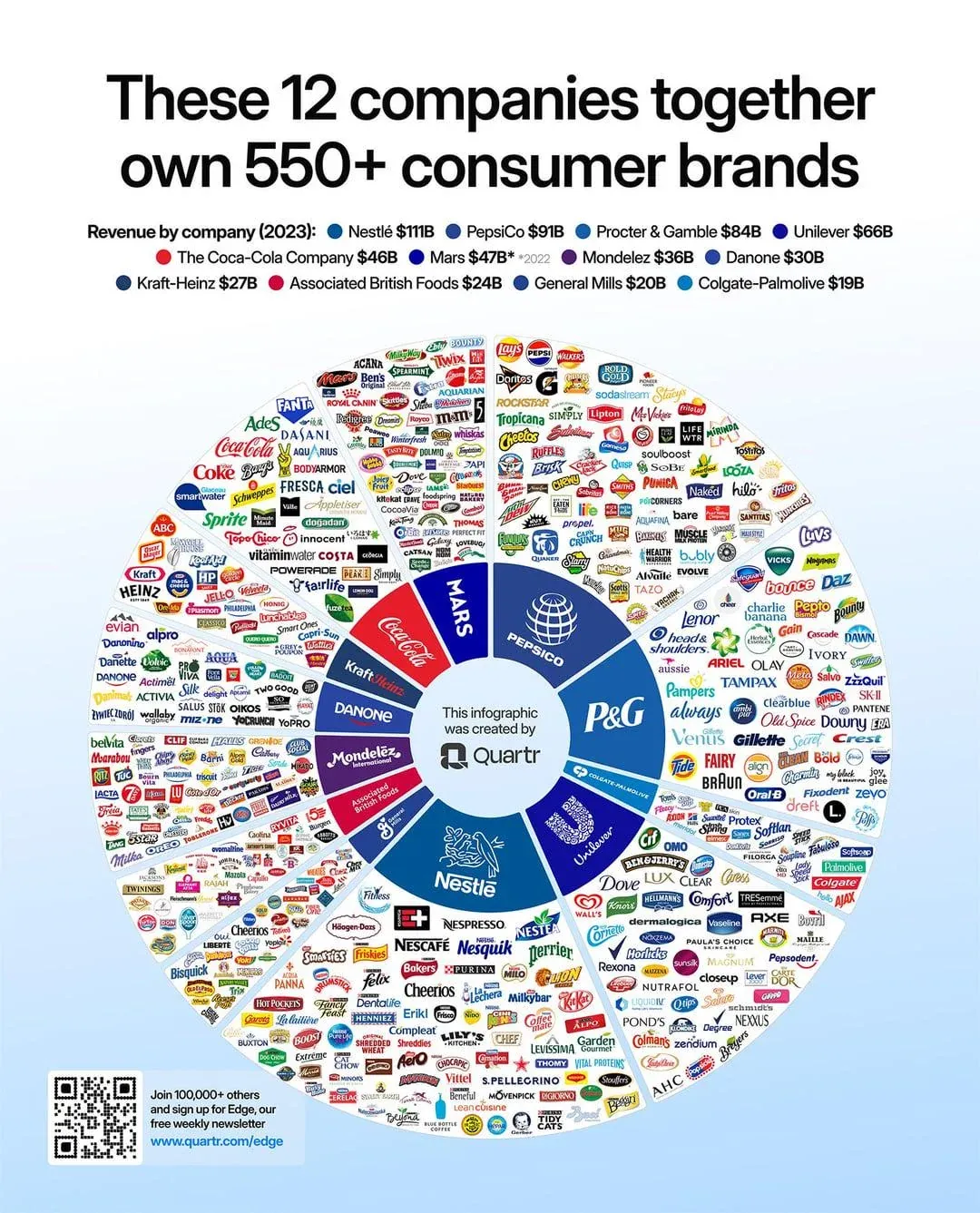
I am sure most people have seen the image above that shows how a few corporations own most consumer brands. These corporations have carved up the market and that’s how they like it but they are also working with the big name agribusinesses. Recently at COP30 in Brazil, nestle and bayer were the sponsors along with OCP a Moroccan based company who specialise in phosphate extraction which is primarily used for pesticides. You can see how they all work together to further their ideals and increase their profits at the cost of the environment. I also had a little bit of fun and found this. Heiko Schipper is the Business Group President, Foods for unilever and he previously worked for Nestle as the CEO of nutrition as well as a member of the board of management and president of consumer health for bayer. I’m aware I might look like a mad man standing in front of a cork board with string all over the place but ,he has worked for THREE of the big corporations I have mentioned so far. That’s sus man.
Moving on
Ok I got a little carried away over there. Let’s keep going. As you can see these companies own a lot of the food system and they can use that power to control every aspect of our food, from farm to table. They own the farms that grow the monoculture crops which damage the environment. They sell the chemicals that those farms require to maximise crop yields which also damage the environment. They own the supply chains that transport the crops around the world. Corporations like Cargill can control every aspect of the food system and use that to generate profits into the billions. Cargill recorded $4.93 Billion in profits in 2021 which is not bad for a family owned business. Think of the power these corporations have over government. They can use this kind of power to influence laws, hell they can straight up just change laws to suit them. What we are really dealing with here is colonialism. The major powers claimed that they decolonised but in reality it just got shoved under the corporate rug and we all went about our business but the stink is starting to waft into our noses now. So what can we do to break away from these giants?
My Opinion
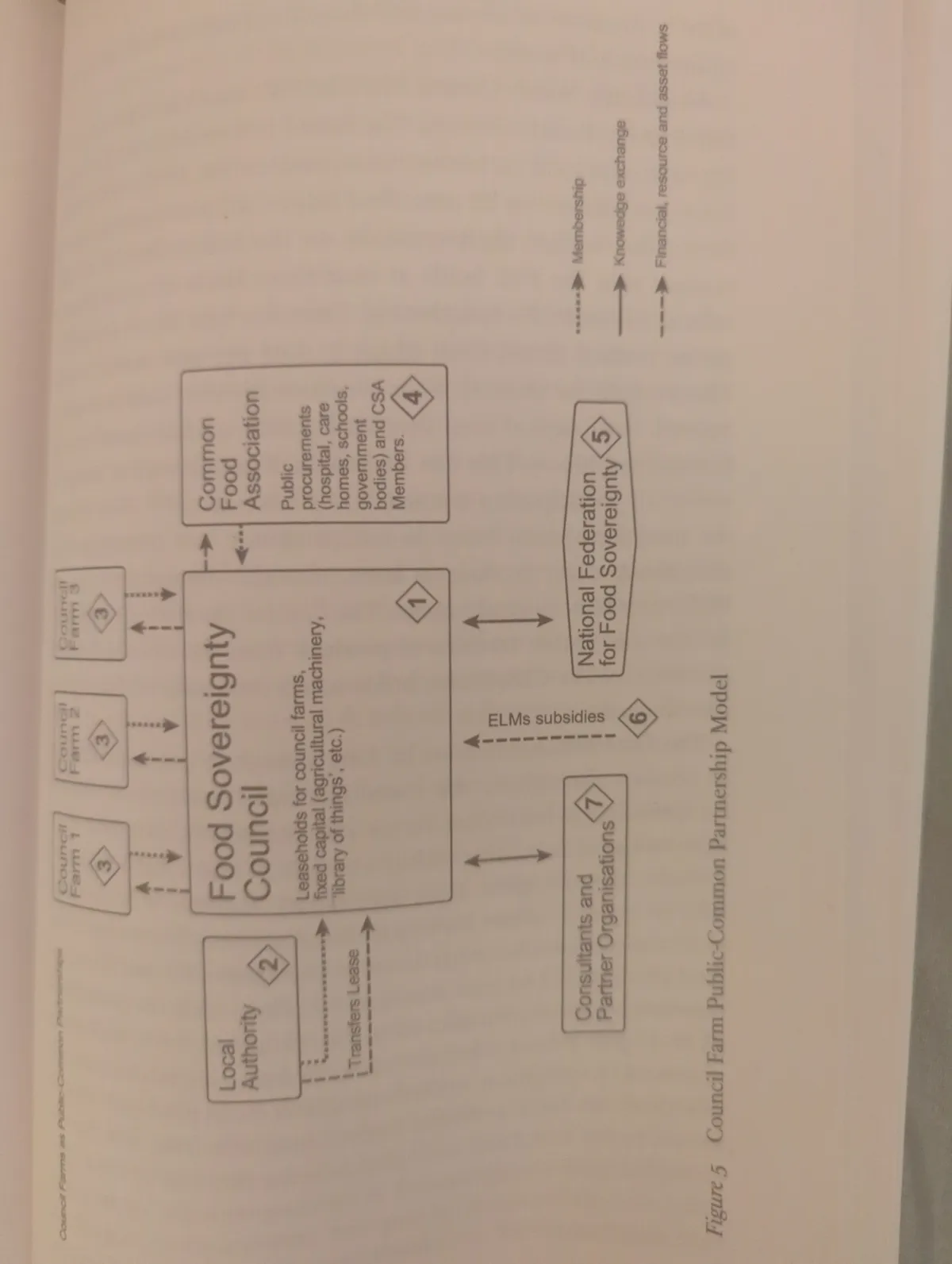
Well that is a tough question and I am not the most qualified person to answer it and solutions will look different around the world but, that doesn’t mean I don’t have some ideas. Pushing for more policies that promote agroecology and sustainable farming practises will be a good start. The book Radical Abundance has a chapter dedicated to food systems and how we can start small and work our way up. The authors talk about how council farms in England can be a low risk way of training new farmers who would adopt agroecological farming methods as their means of farming. They could then go on to use that on their own private farms later on. They discuss how a Food Sovereignty Council could be set up to manage these farms where tools are shared and services are traded helping to reduce costs and spreading knowledge about our food production system and environment. Here is a picture from the book.
Is it a perfect answer, maybe. Is it better that doing nothing, ABSOLUTELY. If you take the time to look there are movements across the world where people are trying to wrestle back control of the land and food from big corporations. It won’t be easy but together we can support each other and win.
(RE)Sources:
https://www.youtube.com/watch?v=k_RiNPKJNdE
https://www.youtube.com/watch?v=4R7mX6pChSA
https://seedfreedom.info/global-movement-for-seed-freedom-our-resolve-our-commitment/